
2027 Half-Day Walk in Ho Chi Minh City’s District 5: Thiên Hậu Pagoda, Nghĩa An Assembly Hall and Lantern Street Cultural Route
11/24/2026
Half-day walk in District 5 visiting Thiên Hậu Pagoda, Nghĩa An Hoi Quan, Bình Tây Market and lantern streets to learn Chợ Lớn’s Chinese cultural life.
If you’ve already walked through District 1’s Central Post Office, Cafe Apartments and Nguyễn Huệ Street, set aside half a day for District 5’s Chợ Lớn Tuy An Chinese quarter. This area isn’t organized around a single commercial street; it’s a living neighborhood made up of old temples, assembly halls, an old market, narrow alleys and everyday shops.
It’s recommended to plan the route for the morning or early afternoon: visit assembly halls and the market first, then walk part of the lantern street at dusk. District 5’s streets feel more lived-in than the city center, so slow down to observe architecture, incense offerings, signs and market trade—there’s no need to rush to every spot.
Chợ Lớn is the long-term residential area of Ho Chi Minh City’s Chinese community. The Vietnam National Administration of Tourism also frames this neighborhood as suitable for walking exploration, visiting old temples, browsing markets and sampling Chinese-influenced food. Compared with District 1’s focus on colonial buildings and commercial attractions, District 5 places faith, wholesale markets and everyday life in the same frame.
On your first visit don’t chase the number of sights. Choose one main assembly hall, one market and one stretch of old street and you’ve got a half-day itinerary; if you encounter an afternoon downpour, shorten outdoor walking and spend more time inside the market or a restaurant.
Start the morning with incense and architecture at Thiên Hậu Pagoda
Bà Thiên Hậu Pagoda Thiên Hậu Pagoda is the easiest first stop in District 5. Public information lists daily opening hours of about 06:00–17:30 with no formal admission fee; actual opening times may change for festivals or temple events, so confirm before you go.
The most recognizable image of Thiên Hậu Pagoda is the coil incense hanging over the courtyard, red lanterns, ceramic roof ridges and Chinese woodcarving. It remains an active place of worship for locals, not merely a photo spot; dress appropriately, keep your voice low, and check whether photography is allowed before shooting ritual spaces.
Thiên Hậu Pagoda’s Chinese roof ridges, red façade and coil incense present District 5 Tuy An’s devotional culture.
Walk on to Nghĩa An Hoi Quan to see Teochew architectural details
From the Thiên Hậu Pagoda area continue along Nguyễn Trãi Street to include Nghĩa An Hoi Quan Nghĩa An Hoi Quan in the same cultural route. Public information gives the address as 676 Nguyễn Trãi Street, Ward 11, District 5. The hall is dedicated to Lord Guan and relates to the history and gathering functions of the Teochew Chinese community.
What’s worth seeing at Nghĩa An Hoi Quan is not one single selfie angle but the roof ridge sculptures, façade colors, incense tables, woodcarving and courtyard layers. If you encounter worshippers or a ceremony, step back when photographing, do not use flash, and avoid blocking passageways to get a full view of the main hall.
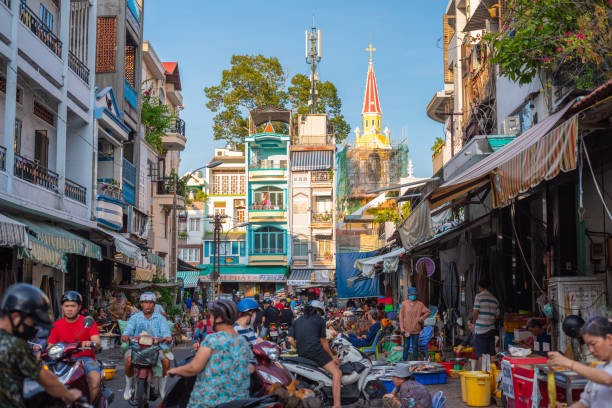
Stroll the old streets: signs, shophouses and daily life
The charm of District 5 lies in the streets between attractions. After leaving the assembly hall, walk along main roads and surrounding alleys slowly, noting traditional Chinese signs, shophouse arcades, incense shops, herbal medicine stores and old-style residences. Some streets may not have obvious sights but show locals moving goods, buying groceries, having tea and chatting—daily rhythms worth watching.
This type of neighborhood isn’t suitable for walking while constantly pointing a camera at passersby. Photographing shopfronts, roofs and streetscapes usually feels more natural than shooting strangers’ faces; if you want to photograph inside a shop or a stall, ask with a gesture first and respect a refusal.
Bình Tây Market: place the market before or after lunch
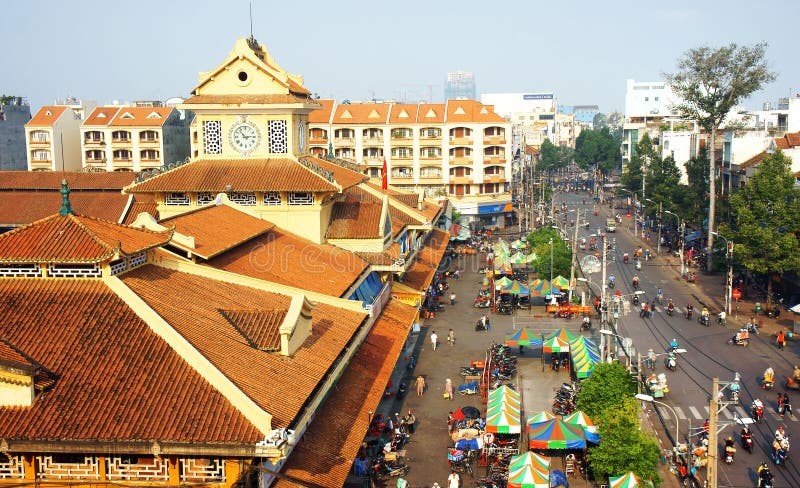
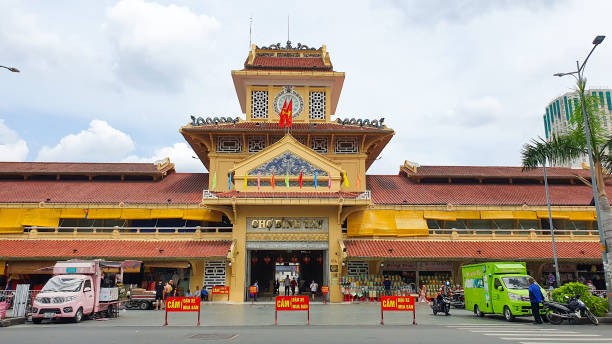
If you want to see a larger market scene, place Bình Tây Market Bình Tây Market in the middle of your itinerary. Vietnam National Administration of Tourism notes the market as an important element of District 5’s commercial tradition, with shops concentrated selling spices, dry goods, ingredients and various daily necessities.
Aisles inside the market and surrounding roads can be crowded, so it’s best to keep backpacks in front and always ask about weight and price before buying dry goods or food. This is a place to observe wholesale market operations more than to do large shopping; if you’re only photographing, the morning usually makes it easier to see the architecture and stalls clearly.
What to eat in District 5: from dim sum to sweet soups
In District 5 it’s better to arrange food as small portions several times rather than reserving a single restaurant. The Vietnam National Administration of Tourism mentions you can find Cantonese dim sum, steamed dumplings, turnip cake, Teochew-style snacks and sweet soups here; if you’re unfamiliar with a place, check seating and turnover before deciding to sit.
Food choices can be adjusted to your walking route that day. Have dim sum after morning visits, a simple meal near the market at noon, and sweet soup or tea in the afternoon as a break—this is preferable to eating too much at once on a half-day cultural walk. Prices vary by shop, portion and ingredients; this article does not fix menu prices without reliable current figures.
See the lantern street at dusk, but don’t rush just for photos
Liang Nhuoc Học lantern street and surrounding Chinese neighbourhoods change character when lanterns light at dusk. Red, orange and gold lanterns and old shop signs make streets more photogenic, but dusk is also when residents buy groceries, merchants receive goods and traffic becomes busy.
When photographing, stand where you won’t obstruct pedestrians and avoid setting up a tripod at shop entrances for long periods. If the street is crowded, point your lens to eaves, lanterns and street depth—these often capture District 5’s layers more easily.
Transport, clothing and worship etiquette
From District 1 to District 5, calling Grab or taking a taxi is usually more convenient than walking long distances in the heat; once there, walk between Thiên Hậu Pagoda, Nghĩa An Hoi Quan and the market. If using buses, confirm current routes and drop-off points before departing—don’t rely solely on stop names from old travel posts.
When visiting old temples and assembly halls, wear clothing that covers shoulders and knees and be mindful of ongoing ceremonies. District 5 has many narrow streets and market passages, so keep phones, cameras and bags within sight; during the rainy season, postpone the lantern street walk until rain eases.
Suggested onward route starting from ÁO DÀI MUSE
If you spend the morning at ÁO DÀI MUSE arranging áo dài rental, hair and makeup and travel photography, you can depart from 65/27 Cách Mạng Tháng Tám, Bến Thành, Hồ Chí Minh, Vietnam and then call a car to District 5.
District 5 is best planned as a half-day and it’s not recommended to cram many cross-district spots after a photo shoot. Put Thiên Hậu Pagoda, Nghĩa An Hoi Quan and the market on the same day and decide at dusk whether to continue to the lantern street based on weather and energy, keeping outfits, photos and pace comfortable.